Cheaper to Protect Than Restore
Washington FFI is backing the Wild Olympics bill to keep Olympic Peninsula rivers wild, and pushing the state to clear invasive fish from Pass Lake.
 By Steve Jones
President, Washington FFI
Wild & Scenic River status for the Olympics Over the past four months, Washington FFI has focused its conservation work on two priorities: protecting the rivers and wild fish habitat of the Olympic Peninsula and restoring the trout fishery at Pass Lake. In early September, Washington FFI Director
Richard Plunkett was invited to a meeting hosted by
U.S. Sen. Patty Murray to rally support for her Wild
Olympics Bill to protect watersheds surrounding Olympic National Park. The bill would expand wilderness adjacent to the park and provide Wild & Scenic River status to watersheds surrounding it.
Murray has been promoting the bill for more than a decade and plans to reintroduce the legislation in the next Congress. In 2023, Washington FFI joined a group of 40 sportsmen’s organizations and local guides called Sportsmen for Wild Olympics to back her plan. The campaign is becoming more urgent with new threats of removing roadless protection to National Forest around the park. All that was on the agenda at the meeting, and Richard made our position clear: clean water and healthy rivers are public assets that are less expensive to protect than to restore.
The Quilcene Roadless Area illustrates what is at stake. Its intact, undeveloped watershed provides drinking water for roughly 16,000 Port Townsend area residents at the same time it protects salmon habitat.
Washington FFI supports the Wild Olympics campaign and legislation that would provide permanent
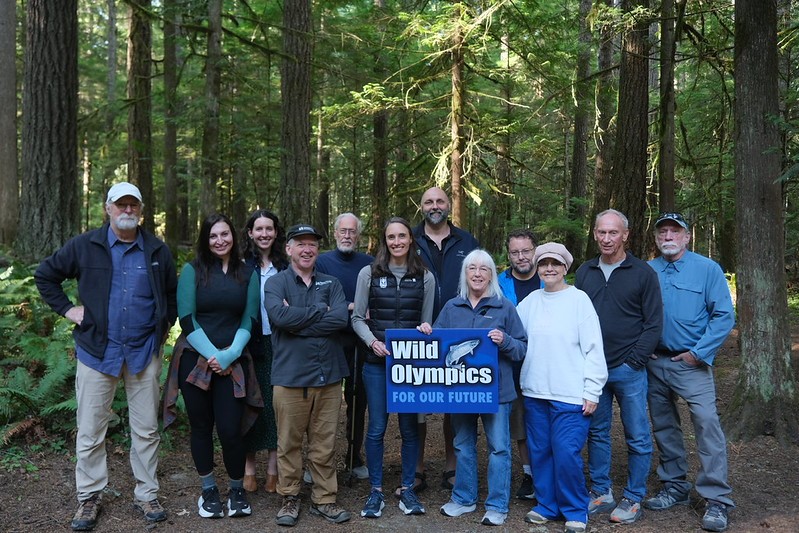
Sen. Patty Murray, fourth from right, met with sportsmen and women in September. Washington FFI Director Richard Plunkett is at far left.
PHOTO COURTESY OF WILD OLYMPICS
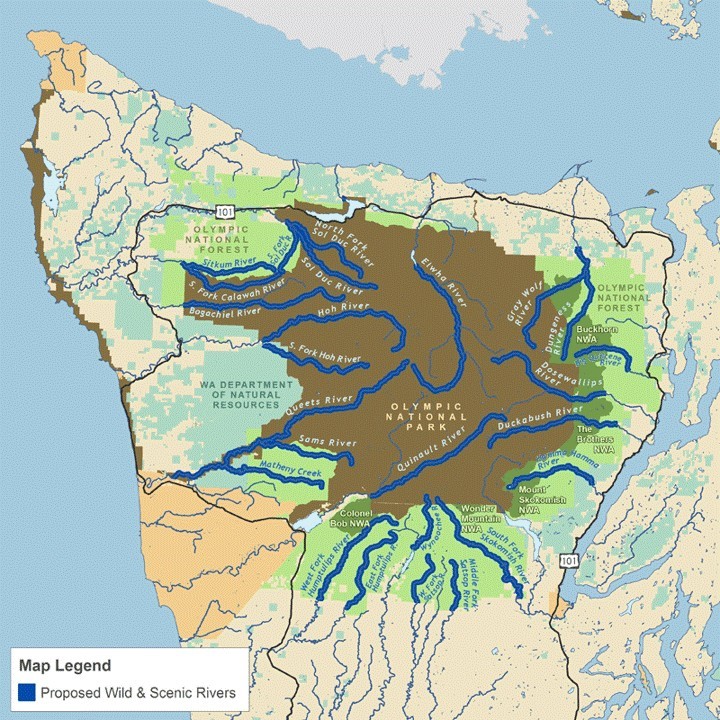
Proposed Wild & Scenic Rivers (blue) run inside Olympic National Park (brown) and on the national forest and other public land around it.
MAP COURTESY OF WILD OLYMPICS
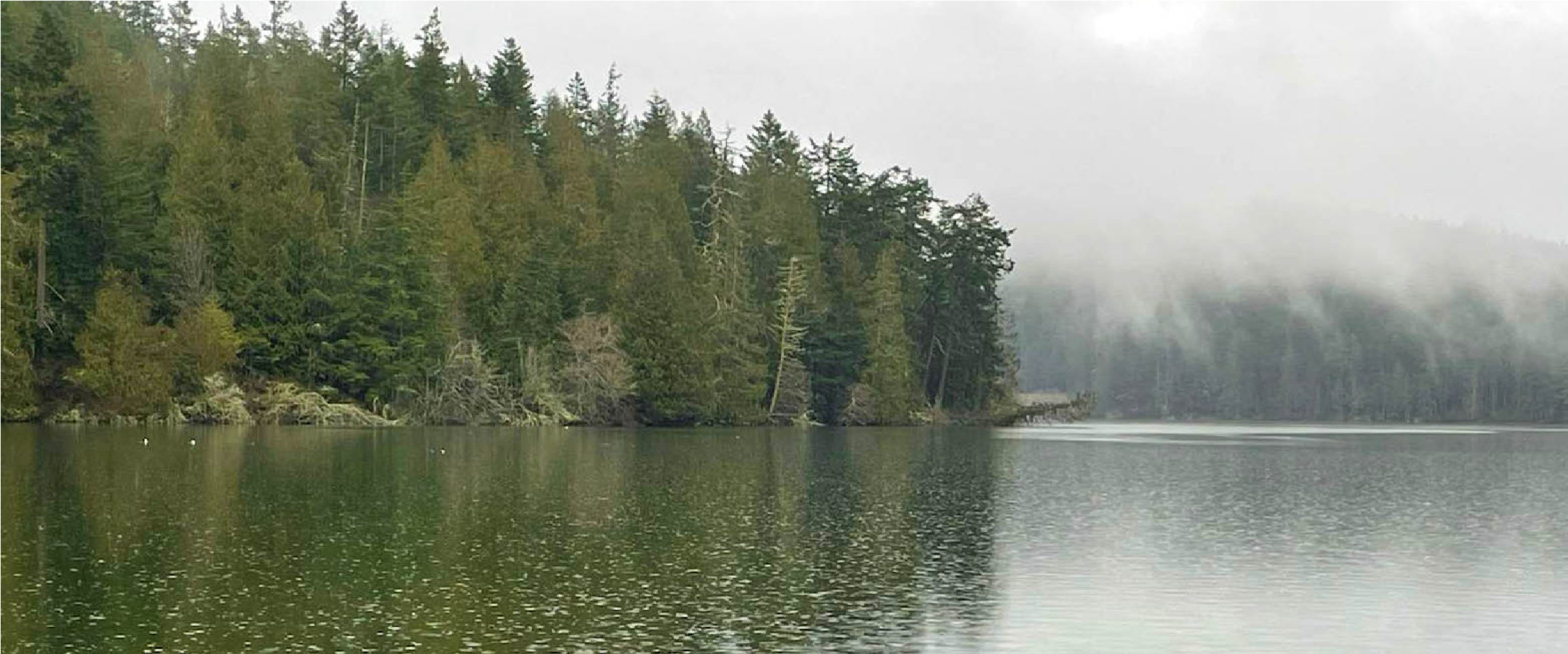
Pass Lake in Deception Pass State Park. GREG SISSON, OLYMPIC FLY FISHERS OF EDMONDS |
protection for many of the Olympic Peninsula’s remaining roadless forests.
Continuing effort to restore Pass Lake At Pass Lake in Deception Pass State Park, Washington FFI has taken a more direct role in addressing threats. The 98-acre lake became Washington’s first fly-fishing-only lake in 1940 through the efforts of the Washington Fly Fishing Club. It has been managed as a catch-and-release trout fishery since 1998.
Today, Pass Lake faces three significant problems: toxic cyanobacteria blooms, Eurasian watermilfoil and invasive fish. Last year, we worked with members of the Fidalgo Fly Fishers and other affiliated clubs to press Washington State Parks, with Department of Ecology funding, to address the algae and milfoil issues. They agreed and got to work. Now Washington FFI is pressing the Department of Fish and Wildlife to address the invasive flathead minnows and yellow perch that are competing with trout and ruining the fishery.
In September, Washington FFI formally asked WDFW to include Pass Lake in its invasive-species control program, evaluate rotenone or other restoration tools, and identify funding for a restoration program in the 2027 budget. Members of Fidalgo Fly Fishers and other affiliated clubs also wrote WDFW in support.
I testified about the issue to the Fish and Wildlife
Commission at its meeting Sept. 11. Commission
Chair Jim Anderson and WDFW Director Kelly Susewind both said they were aware of the issue. Susewind said treating the lake would consume about half the agency’s annual rotenone budget.