
by Dennis Tsuyuki
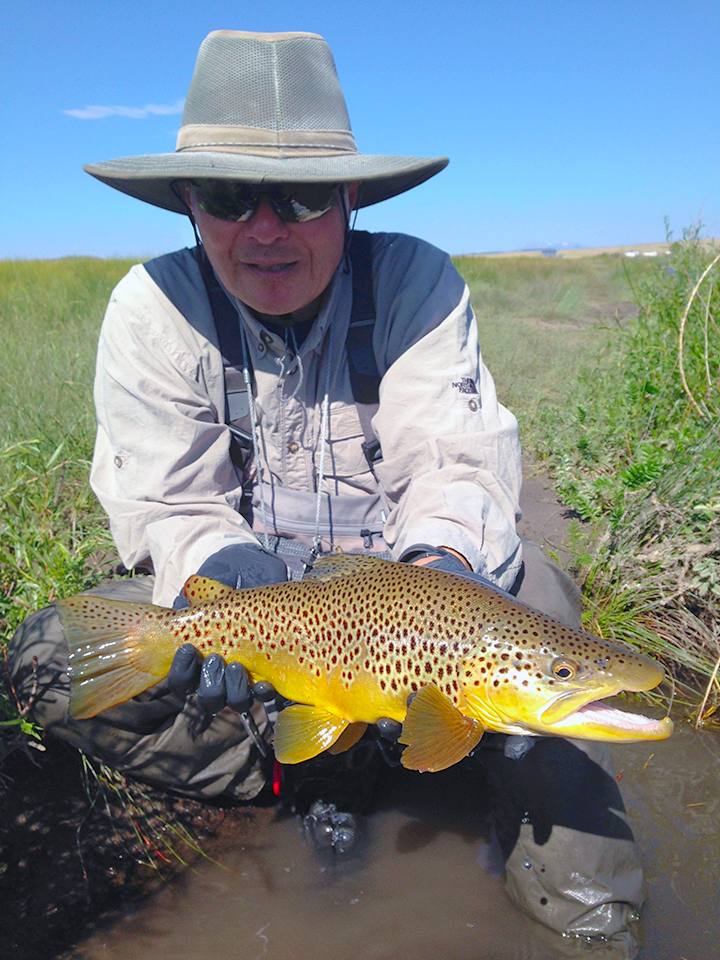 Dennis grew up fishing streams in Southern California as well as in the Sierra Nevada mountains. In the mid-sixties while on a Boy Scout trip to New Mexico, Dennis experienced fly fishing for his first time. He knew immediately this was the way he was going to fish. A few years later in high school, Dennis was enrolled in a history class. The instructor happened to be the legendary Hot Creek angler Mas Okui. Of course Dennis wasn’t the best student. However he certainly absorbed a lot of Mas’ fly fishing guidance. Dennis and Mas have forged a lasting kinship that has spanned many years and numerous shared fly fishing experiences.
As one would expect, Dennis has adopted Mas’ fishing techniques including the use of Mas’ custom long leader for dry flies. Following Mas as an instructor for Sierra Pacific Fly Fishers, Dennis continues to instruct on Mas’ dry fly fishing methodology. Dennis travels and fly fishes throughout the Western United States and still considers Hot Creek to be his home water.
The Dream Caddis
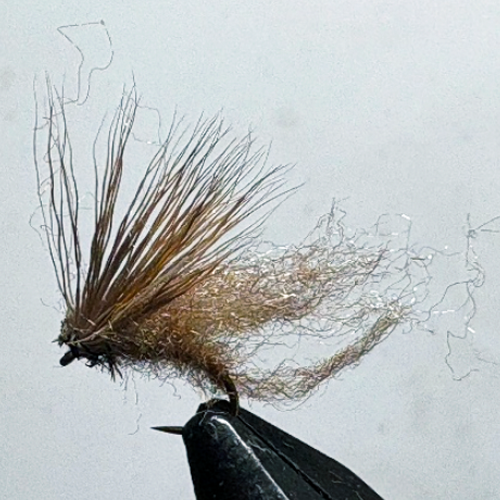
This fly is intended to replicate an emerging caddis or a stuck in the shuck caddis. It is a very productive pattern throughout the western states as well as on Hot Creek. It fishes well on very smooth technical waters as well as rough pocket water. It can be used during caddis emergence or no-hatch periods. Seems like the trout recognize the vulnerable state this fly pattern represents. This fly rides in the film. The only part of this fly that rides above the film is the wing. Therefore, you should dress only the wing. I recommend Mucilin with silicone for dressing this wing. This fly should be fished dead drift.
There are no videos on how to tie this fly other than the one in SPFF’s Library. This fly was designed by me back in the early mid-1990’s. Most fly patterns mimic a static instance in the time during a particular phase of an insect’s life (e.g. nymph, emerger, adult, spinner) where the insect retains that shape for a while. We know life is a continuing changing process. We must remember some of these changes can be very brief time period within an insects lifetime and barely, if at all, noticed by us. This pattern represents an easy vulnerable point in an insect’s life and the trout seem to recognize that. Many fishermen are uncomfortable with this pattern because it doesn’t fit into a neat trim looking fly. It isn’t supposed to. Hence the name Dream Caddis. Besides, how many times have you had a fly that seems to work better and better the more torn up it gets.
.…. if you want to read more click on the image below (please note the control panel at the bottom of the page )