
The Northwest Youth Conservation Fly Fishing Academy heads into its
25th year still doing what it does best: teaching young anglers everything from their first cast to caring for the water they fish.
By Ryan May
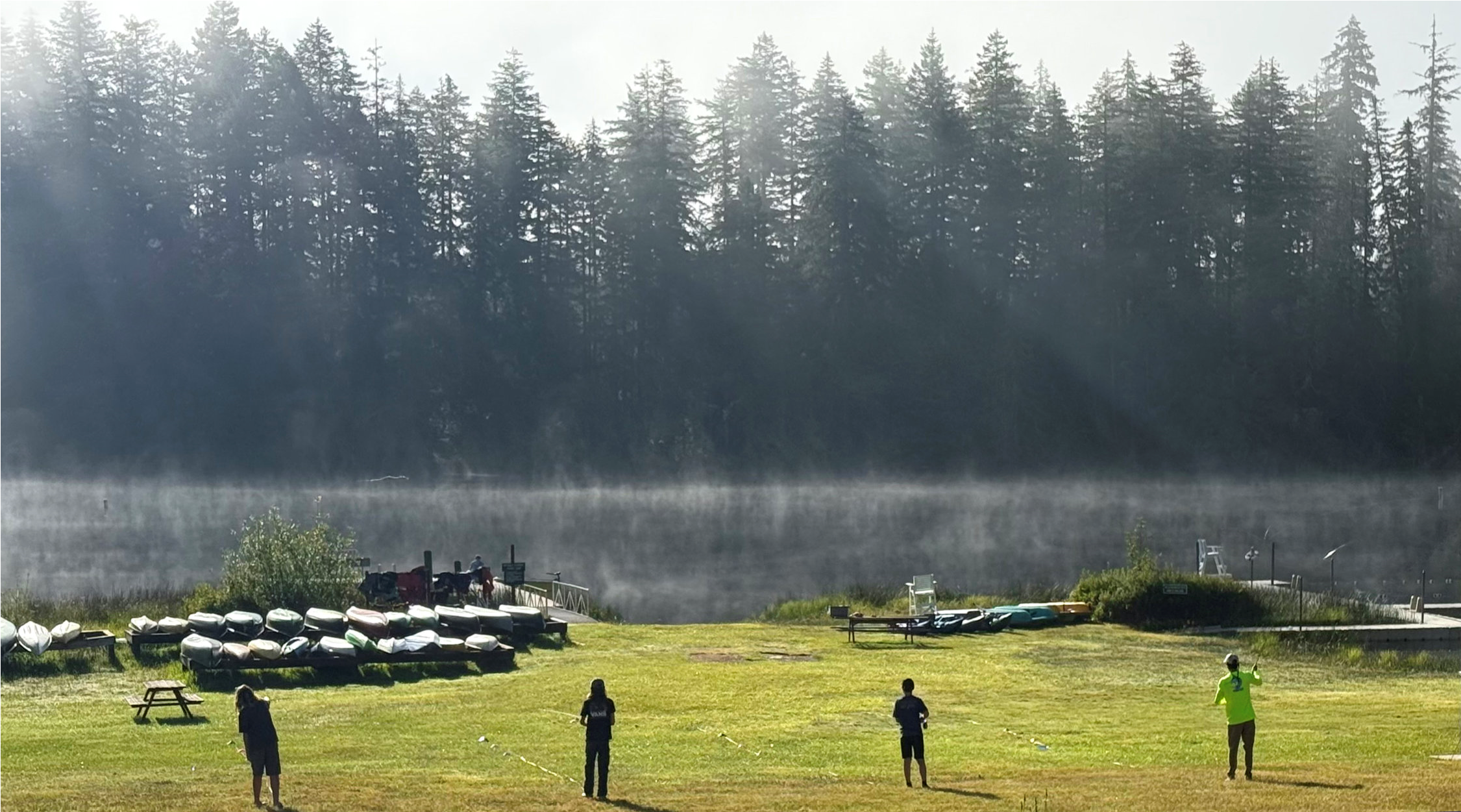
A morning casting session on Panhandle Lake. MARION HILLER
E
very June, 18 kids arrive at the Northwest Youth Conservation Fly Fishing
Academy with a sleeping bag, a few nerves and not much else. Student Leader Paul Lesh describes them as “shy, uncertain and apprehensive.”
One of them was a boy named Elijah. He had come all the way from Ohio.
On the first day, he wasn’t talking to anyone. He seemed small for his age, and to Marcie Kindinger he looked close to tears. Homesick, probably.
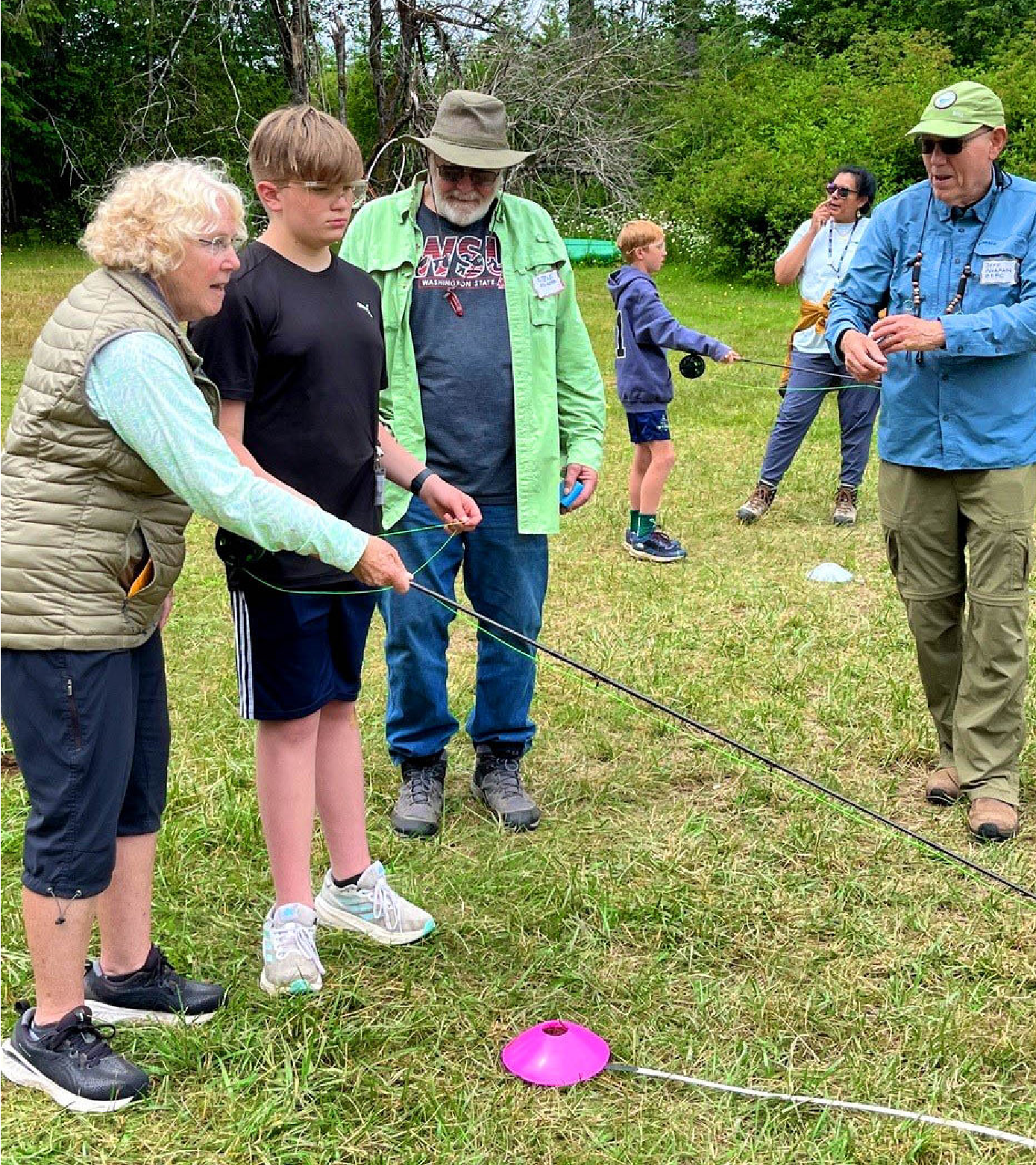 went by he struggled with the skills, but he gamely tried them all. He got better. He made friends. By the end of the week, Kindinger says, he seemed confident in himself. The next year, his parents begged to have him return. The family was in the middle of a move to California. The Academy doesn’t usually take a student twice, but they made an exception. “Right away he showed leadership and made friends quickly,” says Kindinger, a co-director of the Academy. “He was so well behaved and motivated, we just loved his attitude!” After camp, he wrote her a letter asking to come back the following year as a Ghillie, one of the Academy’s camp counselors. He was still pretty young and small, and that year there were plenty of strong candidates. Then Kindinger heard from his grandfather. “He got his mother and father into fly fishing and they now do it as a family,” she says. “That’s exactly what we hope for!” Somebody showed him. Then he showed ON THE LAWN Instructors work on a camper’s cast. them. PAUL LESH |
She and a few other staff members went over to talk with him. He didn’t open up much. As the days A week at Panhandle Lake
Elijah is one of roughly 450 boys and girls who have come through the Academy since it started in 2002, by Co-Director Peter Schuitemaker’s estimate. They’re 12 to 16 years old. Next year, the Academy marks its 25th anniversary.
The camp is run jointly by the Washington Council of Trout Unlimited and Washington FFI. Academy leaders and instructors are all volunteers. Washington FFI fly clubs, Trout Unlimited chapters, businesses, individual donors and the Washington State Council of Fly Fishers International help pay for it.
The week happens at Panhandle Lake 4-H Camp, 500 forested acres 10 miles west of Shelton in the shadow of the eastern Olympics. Students cast, tie flies, fish the camp’s stocked lake and chase cutthroat in three nearby streams. They go home with a 5weight rod and reel, a full fly box and a loaded sling pack.
Families pay $750. The real cost is $2,300 per student. Donors cover the rest.
Kindinger tells parents of prospective campers what their kids will do and the gear they’ll take home.
“Their eyes open wide with amazement,” she says. “They can’t believe the value their child will receive.”
More classroom than campground
The people who run the Academy are clear about what it is.
“From a director’s perspective, the NWYCFFA is more of a learning experience than a summer camp,” says Bruce Merighi, co-director of the Academy.
Students are chosen, he says, “on their desire to learn, not just their desire to go to someplace and fly fish for a week.” The schedule packs 26 classes and activities into a single week, and a bell keeps it moving.
“Yes, they have fun and there is a lot of free time for the students to be kids,” Merighi says. “But then a bell rings and it’s back to learning something about tying, casting, entomology, stewardship, tactics or conservation.”
That list covers the same ground as Fly Fishers International’s own mission: education, conservation and a growing community of fly fishers.
Casting happens on the lawn above the lake, and Marion Hiller is the Academy’s FFI casting instructor.
Students begin with the basic overhead cast and move on to roll casts, hauls and double hauls. By the second day, the Academy promises, students should be able to cast well enough to fool a fish.
“That’ll catch fish”
The tying room is a favorite. Every tool and material is provided, and instructors stay after class to help each student tie at least four patterns to take home.
Lesh doesn’t teach many of the classes himself. He sees what comes out of that room, though.
“The kids really like the fly tying,” Lesh says. “They all want to come show me their flies for my comment, which is usually ‘that’ll catch fish.’”
Bugs, guts and fish passage
The conservation side of the week is hands-on, and sometimes messy.
“I learned how starving wolves eat.”
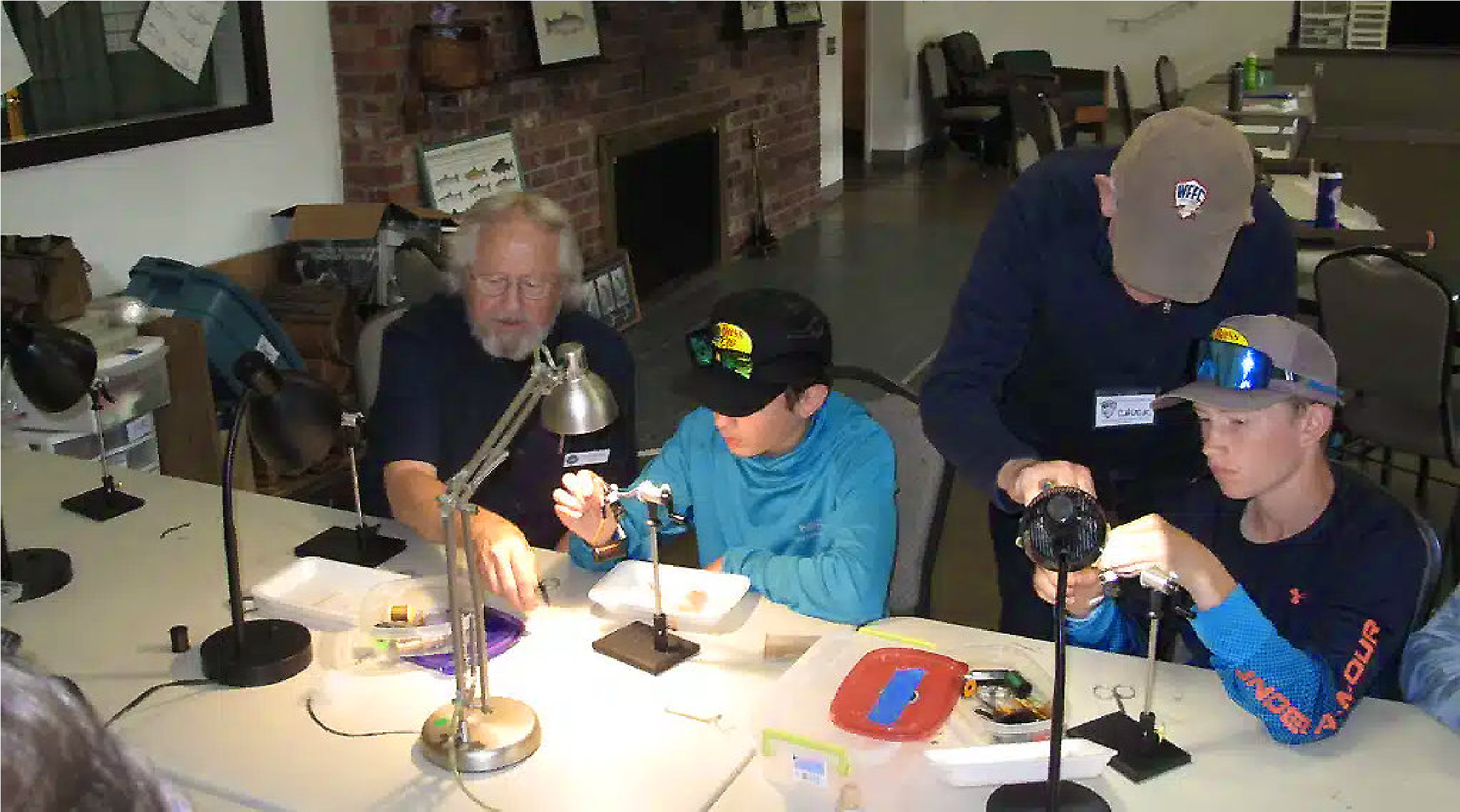
IN THE TYING ROOM
Instructors tie alongside campers at the vise.
NWYCFFA
Marcie Kindinger
Students sample a nearby creek for the insects fish eat, then head back to the tying room to tie something close. They dissect a trout to see how it works. They learn about fish passage barriers, radio telemetry and invasive species — the last one through an archery game.
They also visit a hatchery. When Kindinger tells people about the Academy, she explains that the kids “go to a hatchery to see how fish are raised, and how that is not necessarily a good thing.”
No fish, no problem
This summer, the Academy pointed students toward moving water.
“This year our focus was river wade fishing,” says Schuitemaker, who served as co-director in 2026, his third year volunteering with the Academy.
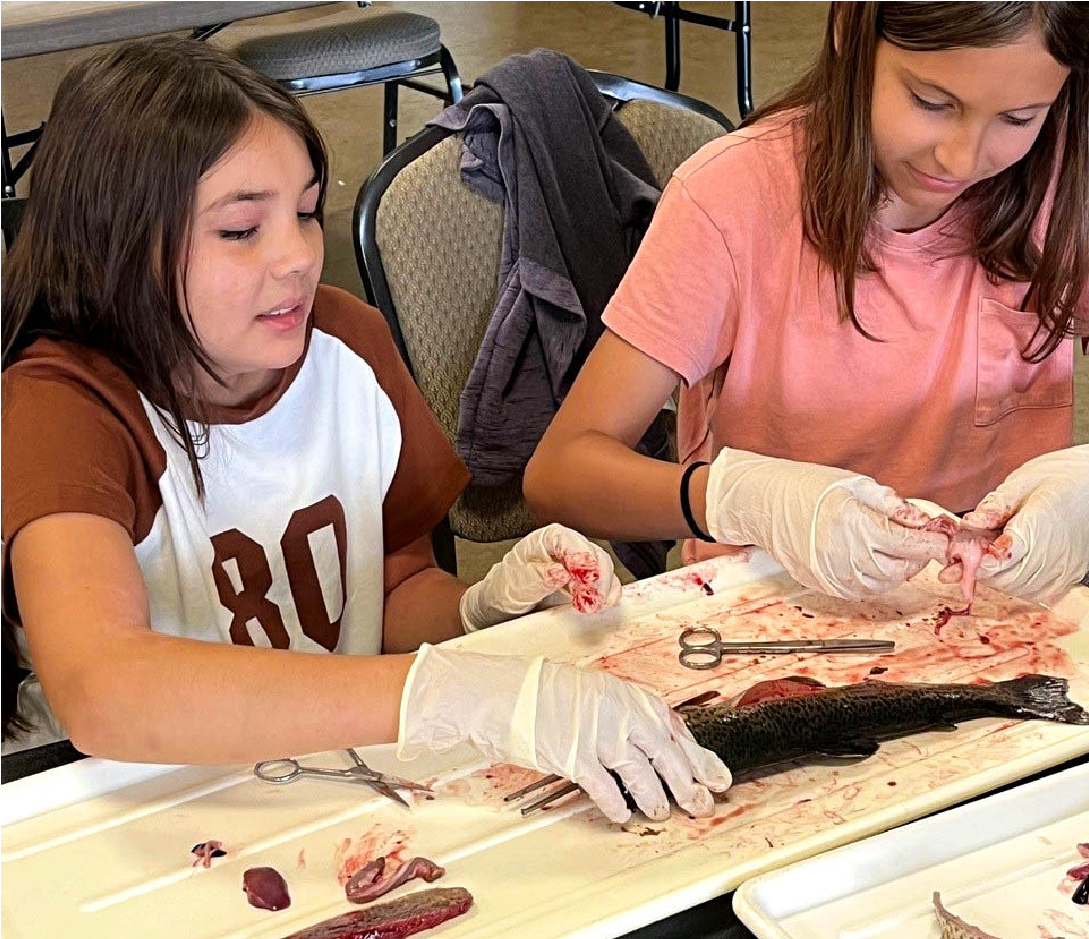
What’s inside a trout. PAUL LESH
At one point he led a group on a bushwhack through rough terrain to reach the river.
“The kids absolutely loved it, even though they didn’t catch any fish,” Schuitemaker says. “They called it an adventure they would never forget.”
Kindinger counts that kind of thinking among the things the job taught her.
“I learned how to appreciate the effort and make the result less important,” she says.
Webbed feet
Merighi is a former fire chief. He says that work made him “acutely aware of the need for organization and pre-event planning.”
 The Academy learned why that matters the hard way. Several years ago, during a change in leadership and just as COVID-19 was emerging, one of the Ghillies became symptomatic at camp.
“We jumped into the emergency without a plan and fortunately everything worked out ok,” Merighi says.
The Ghillie went home, and the directors called parents, volunteers and the health district. Afterward they wrote a full emergency plan covering prevention, preparation, response and recovery, and had it vetted by local fire, law enforcement and EMS agencies. Building it led to a food safety checklist, a basic incident command structure and a stronger watercraft and wading curriculum.
“To date the only pieces of that plan that have been used are the prevention and preparedness components,” he says.
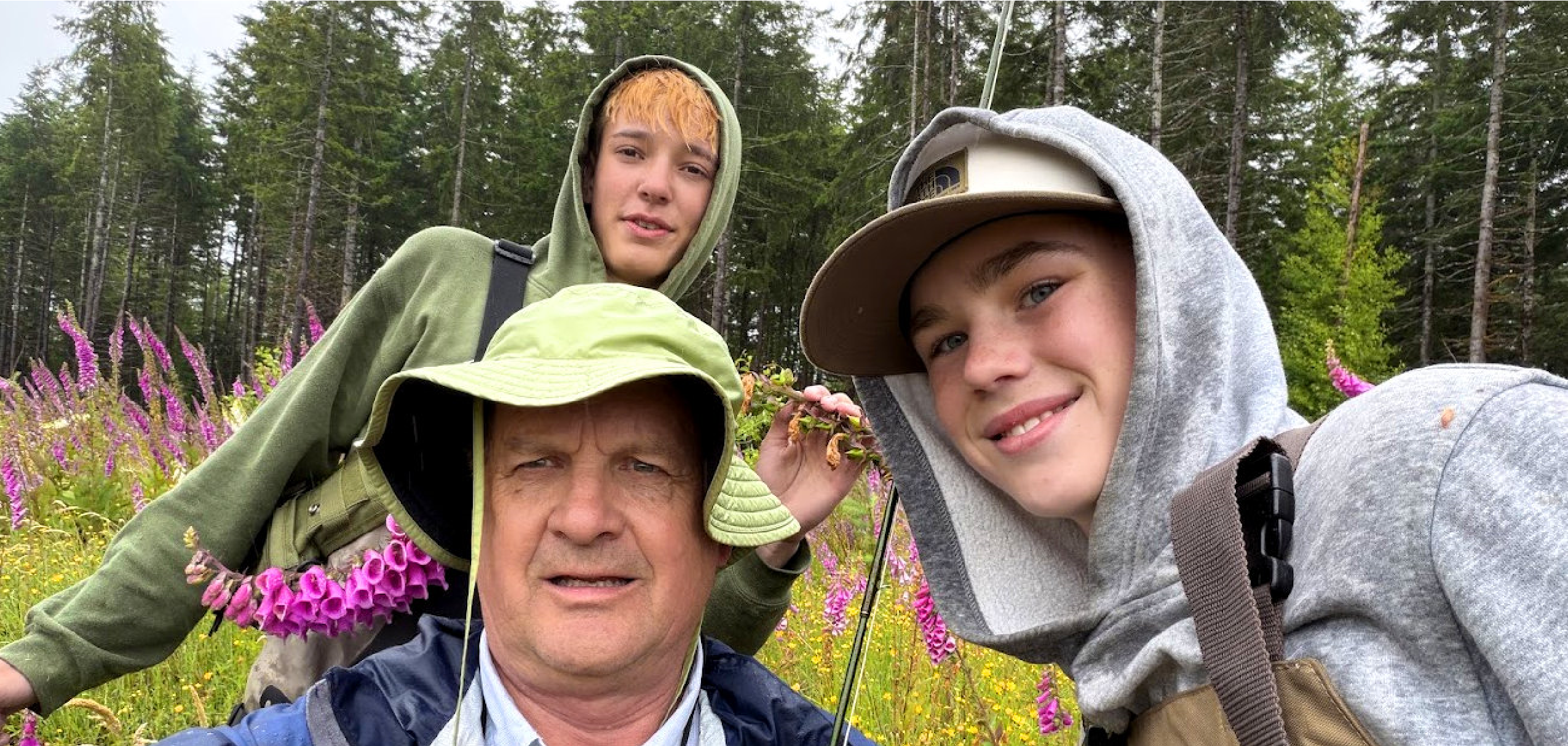
THE BUSHWHACKERS Co-Director Peter Schuitemaker with two of the campers who followed him to the river. PETER SCHUITEMAKER
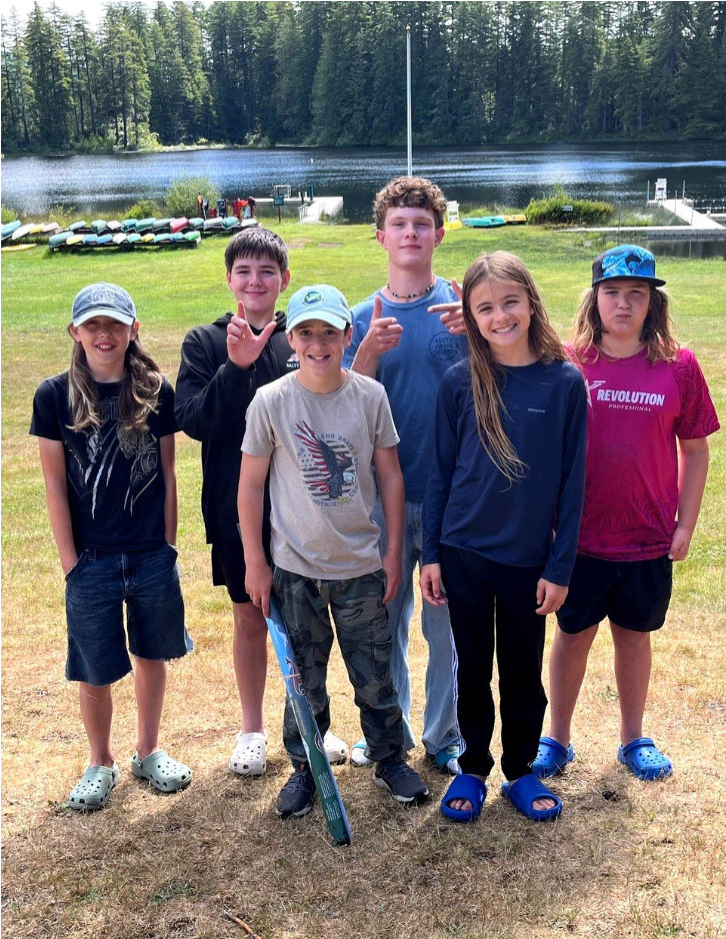
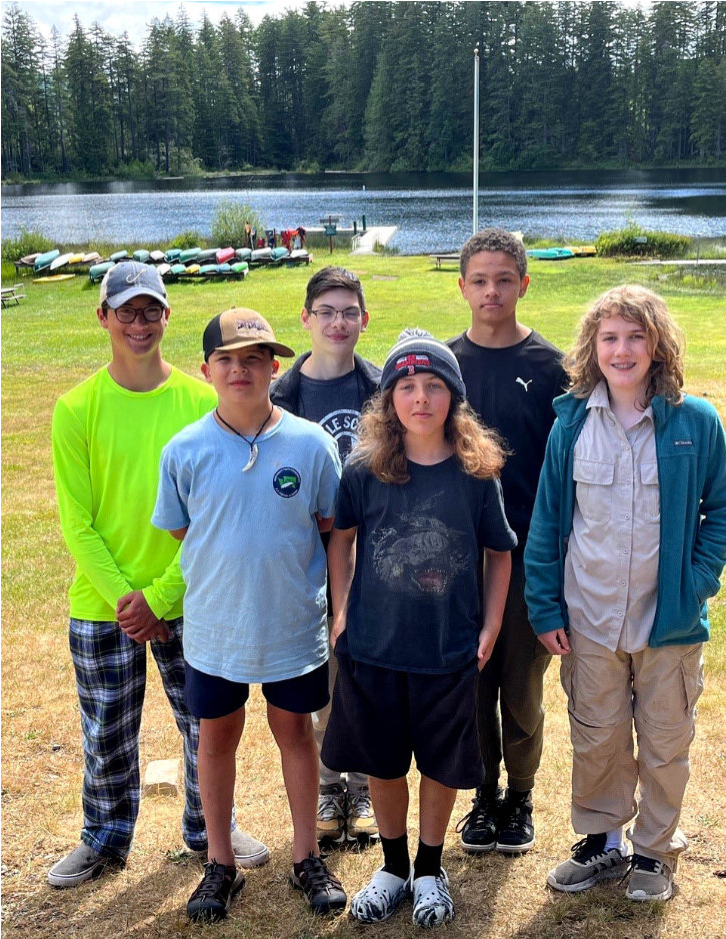
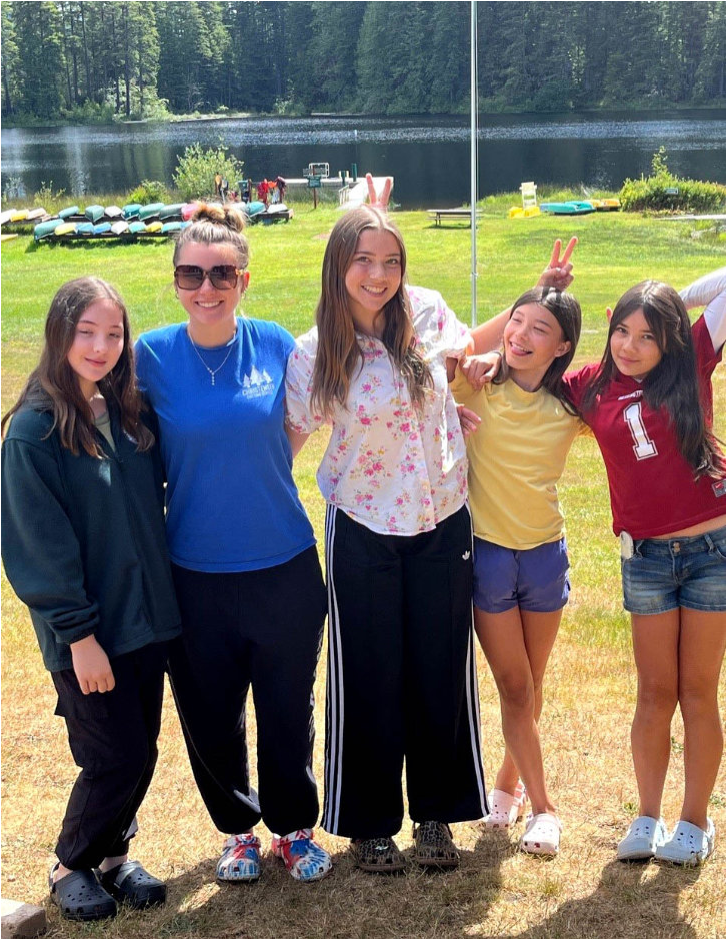
A few of the Academy’s campers and Ghillies. PAUL LESH
The rules on the water are simple. Every student has to know how to swim, and every student wears a life vest on the dock, in a boat or in a river. Wading stops at the knees. Whenever students are out on the lake, Ghillies with rescue gear stay on the water while an observer on shore keeps in radio contact with them. There’s one staff member for every two students.
Most of the work happens long before camp. The directors spend months on a to-do list that covers gear, applications, donations and calls with parents, then meet after camp to review what needs fixing. Once the week starts and the Student Leader takes charge, Merighi says, the directors become “swimming ducks.”
“When viewed from shore, a duck appears to swim in a serene manner,” he says. “But if viewed from below, there are webbed feet moving furiously forward.”
A bell, a stare-down and a guitar
Lesh spent 30 years teaching and coaching before this, and he brings that with him.
“I use all my tricks, from ringing the camp bell to an occasional stare-down for a talkative student,” he says. “Working with all kinds of students is a real pleasure.”
The bell calls everyone to their seats in the lodge. Most students come straight from a school year, so following the rules comes easily, he says.
Not every good moment is on the schedule. One evening after a long day, one of the instructors brought out a guitar and harmonica and started to play.
“The kids were singing along, tapping their feet to the music,” Lesh says. “It was totally spur of the moment. The respect the kids showed was heartwarming.”
Lesh made sure to thank Dan and his dog.
Meals come from an on-site cook, three a day plus snacks, and they don’t last long.
“I learned how starving wolves eat,” Kindinger says. “There was never an opportunity for a meal or snack that wasn’t met with feral enthusiasm.”
The week ends. The friendships don’t.
By the end of the week, the shy kids from the first day look different.
“The academy campers come in as shy, uncertain and apprehensive but leave with confidence, camaraderie and friendships,” Lesh says. He watched several of them trade phone numbers to keep the week going.
| “Teenagers will remember who made time for them.” |
A lot of them want to come back. Last year, many former campers wanted to come again. While they were on the waitlist, the idea of a reunion came up. “Those lasting friendships warm my heart,” Kindinger says.
Some come back as Ghillies, and some ask about it before anyone has explained how. “It thrills me when kids are applying to be Ghillies while we’re telling them how to apply!” she says. Others reach out later asking where to fish and what flies to use.
Schuitemaker shared one comment from a student. He says it was like many the Academy received.
“Thank you so much! This camp opened my heart to great people. Everyone was so awesome and kind. The way this camp helped me learn to fly fish was 10/10!”
Who showed you?
Steve Jones
Washington FFI Director Ruth Sims watches the loop.
NWYCFFA
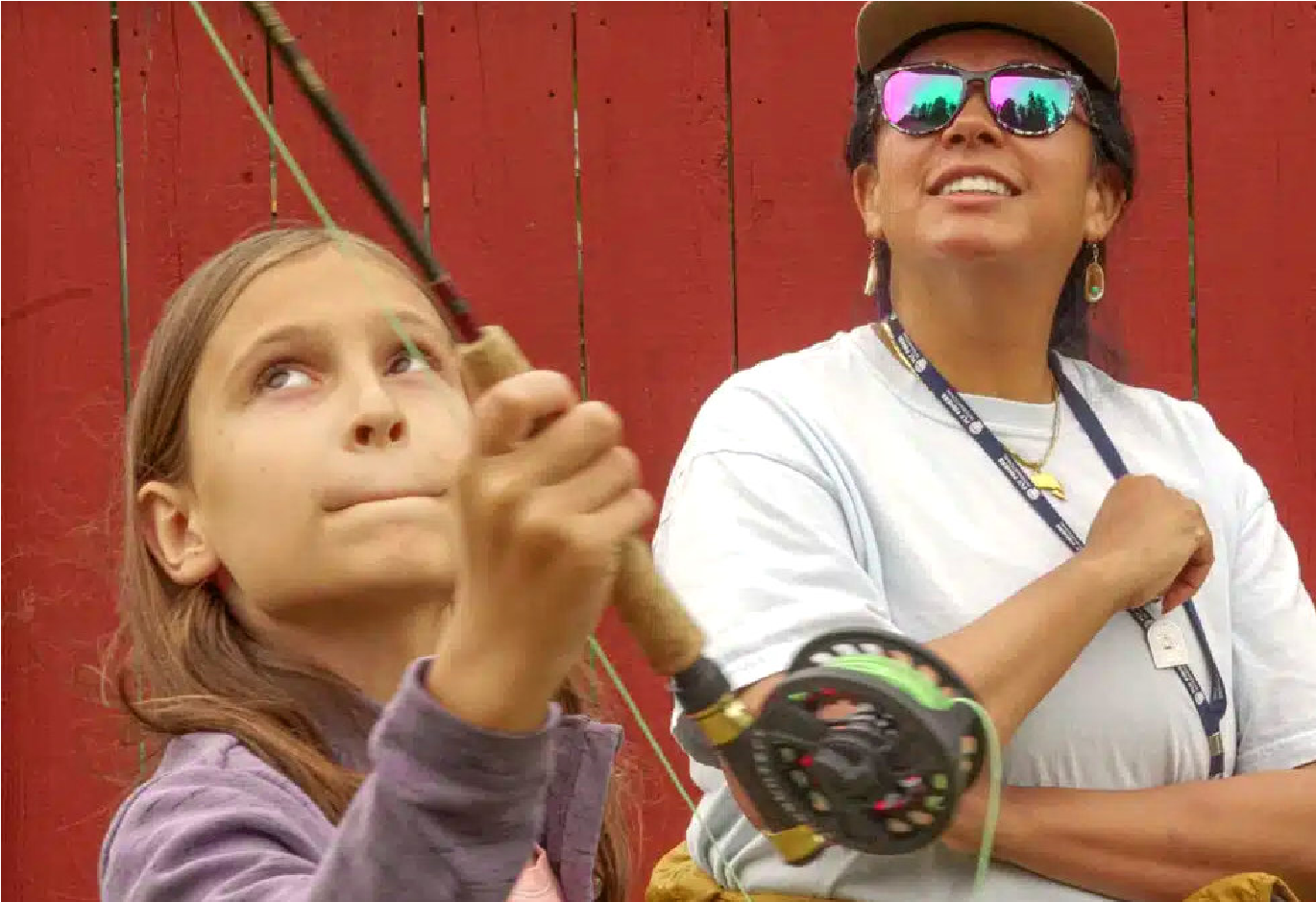 The Academy has come through a lot to reach 25 years. Kindinger, who is handing her role to a successor, has met some of the longtime volunteers and former directors.
“There have been many challenges that they faced: the destruction by fire of the previous camp, COVID, old age, finding a new facility, raising money to pay for it all,” she says. “Their spirit and foresight linger over the camp.”
For Steve Jones, president of the Washington State Council of Fly Fishers International, the reason to keep it going comes down to the first spark of interest. Jones says a teenager’s curiosity about fly fishing doesn’t wait around.
“Ignore it, and it evaporates,” he says. “Engage it, and you’ve lit a fuse.”
The skills matter. But Jones says they’re not the whole point.
“You’re not only teaching kids how to tie a fly, cast a line or read the water,” he says. “You’re transferring the scarcest commodity in our modern world:
attention.”
That’s what Elijah got, and what he passed on. It’s what most fly fishers can trace back to somebody, on some piece of water, who took the time.
“Teenagers will remember who made time for them,” Jones says.
2027 ACADEMY
June 19 to 26 at Panhandle Lake 4-H Camp near Shelton.
WHO
Boys and girls ages 12 to 16.
COST
$750, which covers a 5-weight rod and reel, a full fly box, a loaded sling pack, three meals a day and dorm lodging. Full and partial scholarships, some donated by local fly clubs, are available.
APPLY, VOLUNTEER OR DONATE nwycffa.com